Daggerheart Ancestries Explained: Every Race in the Core Book
All 18 Daggerheart ancestries in plain English — what each one is, what its two features actually do at the table, and which classes they pair well with. Plus the Mixed Ancestry rule.
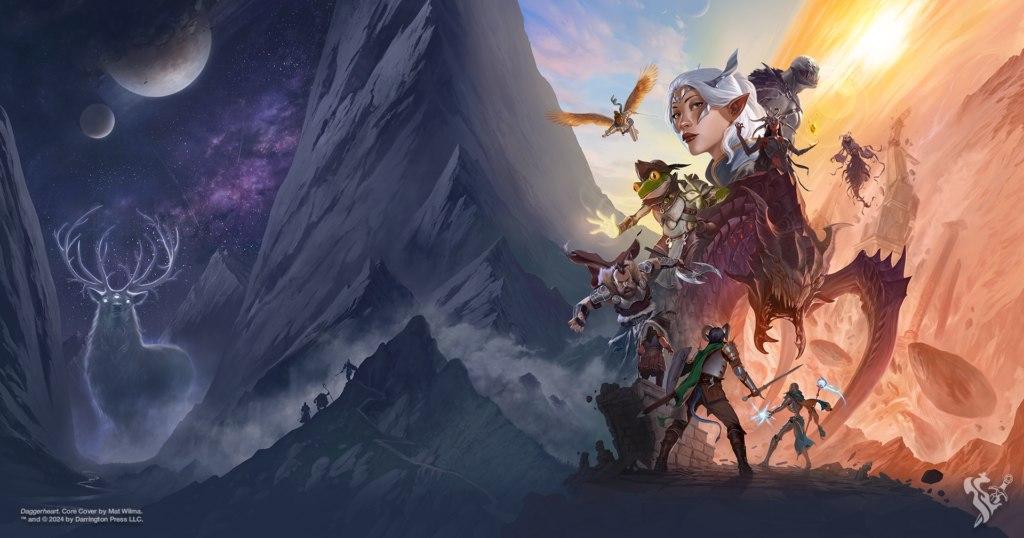
Daggerheart calls them ancestries, not races, and there are eighteen of them — double what most new players expect. The good news: picking one is lower-stakes than it looks. Ancestries in Daggerheart don't touch your stats. Each one gives you exactly two features, and everything else about your character's numbers comes from your class.
So the real question isn't “which ancestry is strongest?” — it's “which two features sound fun, and what do I want to look like while using them?” Here's the full list, what each feature actually does at the table, and the class pairings that come up naturally.
All 18 ancestries at a glance
| Ancestry | Features | In one line |
|---|---|---|
| Clank | Purposeful Design · Efficient | Built for a purpose — better Experiences, better rests |
| Drakona | Scales · Elemental Breath | Wingless dragon-folk with a breath weapon |
| Dwarf | Thick Skin · Increased Fortitude | Shrug off small hits, halve the big ones |
| Elf | Quick Reactions · Celestial Trance | Fast reflexes, more out of every rest |
| Faerie | Luckbender · Wings | You can fly. And bend luck once a session |
| Faun | Caprine Leap · Kick | Goat-legged mobility and a mean donkey-kick |
| Firbolg | Charge · Unshakable | Bovine bruiser that charges in and keeps calm |
| Fungril | Fungril Network · Death Connection | Mushroom-folk telepathy — even with the dead |
| Galapa | Shell · Retract | Turtle tank. Literally |
| Giant | Endurance · Reach | Extra Hit Point and melee reach |
| Goblin | Surefooted · Danger Sense | Slippery, sharp-eyed, hard to pin down |
| Halfling | Luckbringer · Internal Compass | The whole party gets luckier |
| Human | High Stamina · Adaptability | Extra Stress and second chances |
| Infernis | Fearless · Dread Visage | Turn Fear into Hope, scare everyone else |
| Katari | Feline Instincts · Retracting Claws | Cat-folk agility with claws to match |
| Orc | Sturdy · Tusks | Hardest to finish off, tusks for closing arguments |
| Ribbet | Amphibious · Long Tongue | Frog-folk — underwater freedom, weaponized tongue |
| Simiah | Natural Climber · Nimble | Climb anything, permanently harder to hit |
Feature names come from the official Daggerheart SRD (used under the Darrington Press Community Gaming License); the summaries and opinions are mine.
Short on time? Pick by what you want to do
- I want to fly. → Faerie (the only core ancestry that can)
- I want to be the toughest thing at the table. → Galapa, Dwarf, or Orc
- I want to be hard to hit. → Simiah or Goblin
- I want a breath weapon. → Drakona
- I want to make the whole party luckier. → Halfling
- I want something nobody else will play. → Fungril or Ribbet
- I can't decide. → Human or Clank fit any concept — or mix two (see Mixed Ancestry)
Or skip the reading entirely and roll a random character with our free Daggerheart character creator →
Free Wondrous Hooks PDF + 10% off your first order
12 ready-to-run quest hooks (Fantasy & Fable Vol. 1), plus SUBSCRIBER10 and new tools — a couple of times a month, never spam.
The 18 ancestries
Clank
Sentient constructs of metal, wood, or stone — built by someone, for something, and that's baked into the mechanics. Purposeful Design gives a permanent +1 to the Experience that matches your original purpose, and Efficient lets you take a long rest move during a short rest. Quietly one of the most flexible picks in the book: every class benefits from a better Experience and faster recovery. The fun is in deciding who built you and whether you still serve that purpose.
Drakona
Wingless dragon-folk, five to seven feet of scales and teeth. Elemental Breath is the headline — a magic attack usable at Very Close range with an element you choose at creation — and Scales softens Severe damage by trading a Stress for a Hit Point. That combination reads frontline: Warriors and Guardians love the durability, and casters like the Sorcerer enjoy a backup attack that never runs out.
Dwarf
Short, dense, and famously hard to put down. Thick Skin turns Minor damage into Stress instead of Hit Points, and Increased Fortitude spends 3 Hope to halve incoming physical damage. Both features do the same job — keeping you standing — which makes the Dwarf the most straightforwardly defensive ancestry short of the Galapa. Natural fit for Guardians; genuinely funny on a Wizard who refuses to stay in the back.
Elf
Tall, pointed ears, senses tuned a notch above everyone else's. Quick Reactions gives advantage on reaction rolls for a Stress, and Celestial Trance adds an extra downtime move whenever you rest. Reaction rolls come up more than new players expect, and the trance compounds nicely with the Clank-style long-game — Rangers and Rogues get the most visible mileage.
Faerie
Winged, insectile, and the answer to “can I fly?” — Wings is unconditional flight with a defensive kicker, and Luckbender lets you reroll the Duality Dice once per session for you or an ally. Flight changes how you approach every encounter, and the reroll is a table-wide safety net. If your GM builds vertical spaces, this is the most mechanically transformative pick in the core book.
Faun
Goat-legged, curving horns, square pupils. Caprine Leap turns Close-range gaps, obstacles, and walls into normal movement, and Kick adds 2d6 damage on a melee hit while bouncing you (or them) out of range. It's a skirmisher kit — dart in, hit hard, be gone. Warriors and Rogues who like fighting in motion will feel at home.
Firbolg
Bovine humanoids — think gentle giant, right up until the Charge lands 1d12 damage on everything in melee after closing from range. Unshakable gives a one-in-six chance to shrug off each Stress you'd mark. We liked the roleplay side of this one enough to give it its own guide. Guardians and Warriors, obviously.
Fungril
Humanoid mushrooms with a mycelial network in place of a group chat. Fungril Network lets you speak with other fungril across any distance on a successful Instinct roll, and Death Connection pulls a memory from a fresh corpse. Neither feature wins a fight — both can crack a mystery wide open. In an investigation-heavy campaign this is a GM's favorite headache, and Druids and Wizards wear it well.
Galapa
Turtle-folk with a domed shell, and yes, the shell works. Shell adds your Proficiency to your damage thresholds — a scaling, always-on defense — and Retract trades movement and action quality for resistance to physical damage when things get dire. The tankiest ancestry in the book. Put it on a Guardian and dare the GM to get through you.
Giant
Six-and-a-half to eight-and-a-half feet, one to three eyes, arms long enough to matter mechanically: Reach upgrades every Melee-range attack to Very Close, and Endurance adds a permanent Hit Point slot. Simple, strong, and zero bookkeeping — melee classes take it for the reach alone, and the extra Hit Point never stops being relevant.
Goblin
Small, big-eared, sharp-eyed. Surefooted means you ignore disadvantage on Agility rolls entirely, and Danger Sense forces an adversary to reroll an attack on you or a nearby ally once per rest. Agility-based characters — Rogues, Rangers — get a constant quiet payoff, and Danger Sense has saved more than one character at our table.
Halfling
Small, round-eared, large hairy feet, and the party's good-luck charm in the most literal sense: Luckbringer hands everyone a Hope at the start of each session, and Internal Compass lets you reroll 1s on your Hope Die. If you like support play that doesn't require doing anything on your turn, nothing else in the book matches it. Bards and Seraphs double down on the theme.
Human
The baseline that isn't boring. High Stamina adds a Stress slot — and Stress is the currency half the features in this article spend — while Adaptability lets you reroll a failed roll that used one of your Experiences. Humans make every class a little more durable and a little more reliable. If your character concept is about who they are rather than what they are, start here.
Infernis
Descendants of demons — horns, fangs, pointed nails, and the single most dramatic feature in the core set: Fearless turns a roll with Fear into a roll with Hope for 2 Stress. Changing the narrative direction of a roll is a big deal in this system. Dread Visage adds advantage on intimidation against hostile creatures. Great on Sorcerers, better on anyone whose backstory earns the horns.
Katari
Cat-folk: retractable claws, slit pupils, ears that swivel. Feline Instincts spends Hope to reroll your Hope Die on Agility rolls, and Retracting Claws is a melee scratch that leaves the target temporarily Vulnerable — which sets up your whole party, not just you. A striker pick with a support twist. Rogues and Rangers, naturally.
Orc
Square-featured, tusked, and famously stubborn about dying: Sturdy gives attackers disadvantage when you're on your last Hit Point, and Tusks adds 1d6 gore damage to a melee hit for a Hope. The last-stand math on Sturdy is genuinely strong — Warriors and Guardians who plan to be the last one standing should look here first.
Ribbet
Frog-folk, and everything you're hoping that implies: Amphibious means natural movement and breathing underwater, and Long Tongue is a Close-range grab that doubles as a d12 Finesse weapon. Any water on the map becomes your territory. It's also just the most fun anyone has ever had describing an attack. Druids and Rogues make it work hardest.
Simiah
Monkey- and ape-folk with prehensile feet. Nimble is a permanent +1 Evasion — the only always-on defense boost of its kind in the core ancestries — and Natural Climber gives advantage on balancing and climbing. Low-flash, high-value: that Evasion point matters on every single attack that comes your way. Evasive classes stack it gladly.
Mixed Ancestry: the rule everyone misses
Buried in character creation is one of Daggerheart's best ideas: you don't have to pick just one. The official Mixed Ancestry rule lets you take the first-listed feature from one ancestry and the second-listed feature from another. Want a Faerie/Halfling who bends luck and rerolls Hope 1s? Legal. A Galapa/Dwarf with a shell and Increased Fortitude? Also legal, and your GM is already tired of you. It's both a flavor tool and a builder's playground — and it doubles the number of interesting combinations in the book.
So which one should you pick?
Honest answer: pick the one you want to describe out loud for the next twenty sessions. The features are balanced enough that flavor should win ties. If you're still stuck, our character creator rolls ancestry, community, class, and Experiences in one click — reroll until something clicks, then go read about your class. And if you're hungry for more options, six extra ancestries are already in playtest in The Void.

QuestHeart — the Daggerheart GM's campaign organizer
Skip building your Daggerheart setup from scratch. Every database mapped to the game's stats and structure — duplicate into Notion in 60 seconds.
- Every database mapped to Daggerheart — Hope/Fear, Domains, Ancestries
- Full SRD adversary roster pre-loaded
- NPCs, factions, locations, and quests auto-link by mention
- Works on the free Notion plan — yours forever
More Daggerheart from us


Or browse the full Daggerheart tools hub →
Whichever ancestry you land on, the rules questions at the table stay the same. Our printable Daggerheart player cheat sheet keeps duality rolls, Hope, and Stress in front of you while the character is still new.
Daggerheart ancestries FAQ
How many ancestries are in Daggerheart?
Eighteen in the core rules: Clank, Drakona, Dwarf, Elf, Faerie, Faun, Firbolg, Fungril, Galapa, Giant, Goblin, Halfling, Human, Infernis, Katari, Orc, Ribbet, and Simiah — plus the Mixed Ancestry option for combining two. The Void playtest adds six more experimental ancestries on top.
Are Daggerheart ancestries the same as D&D races?
Same slot in character creation, different design. Daggerheart ancestries don’t give stat bonuses — each grants exactly two features instead, and your traits come entirely from your class choices. That means no ancestry is mechanically "wrong" for any class.
Can you mix two ancestries in Daggerheart?
Yes, and it’s an official rule, not homebrew: to create a Mixed Ancestry character, take the first-listed feature from one ancestry and the second-listed feature from another. A Faerie/Halfling with Luckbender and Internal Compass is a legal, very lucky character.
Do ancestries affect your stats in Daggerheart?
No. Traits (Agility, Strength, Finesse, Instinct, Presence, Knowledge) are assigned during character creation regardless of ancestry. Ancestries only grant their two features, so pick for flavor and playstyle rather than optimization.
What is the best Daggerheart ancestry?
There isn’t a wrong pick, but some pairings are natural: Galapa and Dwarf for tanks, Goblin and Simiah for evasive characters, Faerie for anyone who wants flight, and Halfling for party-wide Hope. Human and Clank fit everything.
Are more Daggerheart ancestries coming?
Six are already in playtest in The Void, Daggerheart’s free early-access hub: Aetheris, Earthkin, Emberkin, Skykin, Tidekin, and Gnome. They’re downloadable now at daggerheart.com/thevoid.